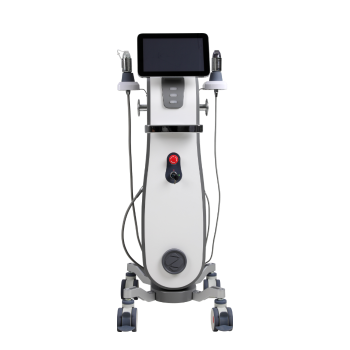
When clinics evaluate RF microneedling treatments, the main question is not simply how deep the needles go or how much energy the device delivers. The more useful question is whether the treatment parameters match the skin concern, treatment area, and follow-up plan. Acne-scar appearance, enlarged pores, fine lines, and mild skin laxity may require different approaches. For professional buyers, understanding how the device is configured is just as important as looking at the final treatment result.
What Is RF Microneedling Designed to Do?
RF microneedling combines controlled microneedle penetration with radiofrequency energy delivered into the skin. The needles create controlled treatment points, while RF energy provides thermal stimulation at the selected depth.
The actual treatment experience depends on the device configuration, needle depth, energy level, treatment area, and operator technique. This is why two RF microneedling treatments may use the same general technology but produce different treatment records.
Which Skin Concerns Are Commonly Treated with RF Microneedling?
RF microneedling is commonly used in professional skin programs where clinics want to address concerns such as uneven texture, visible pores, acne-scar appearance, fine lines, and reduced firmness.
These concerns do not necessarily change at the same speed. A texture concern may be reviewed differently from mild laxity, while the treatment approach for the face may not be identical to the scalp or body.
The useful starting point is therefore the concern itself rather than a fixed treatment setting.
Does Needle Depth Matter in RF Microneedling?
Yes. Needle depth determines where the treatment is delivered and should be selected according to the treatment area and clinical objective.
A system with adjustable depth gives the operator more control when moving between different areas or treatment plans. However, a larger depth range does not automatically mean a better treatment.
For B2B buyers, the important question is whether the depth can be controlled consistently and whether the available range fits the services the clinic intends to provide.
How Does RF Energy Affect the Treatment?
RF energy adds a thermal component to microneedling. Different energy levels can create different treatment conditions, so the operator needs to consider the area, skin condition, target concern, needle depth, and treatment response together.
A device specification may list an RF frequency and energy range, but those numbers should not be treated as a guarantee of a particular result.
The treatment protocol still matters.
What Should Clinics Record During an RF Microneedling Treatment?
A useful treatment record should include the treatment area, needle format, depth, energy setting, treatment interval, visible response, comfort, and recovery observations.
Photographs can also be included, but they are easier to compare when the lighting, camera position, distance, facial expression, and treatment area remain consistent.
This creates a more useful record than taking a photograph after each session without documenting what was actually done.
How Many RF Microneedling Sessions Are Usually Needed?
There is no universal number of sessions that applies to every client.
One session can provide information about treatment tolerance and recovery. A second session may help the clinic review whether the skin concern is changing. Additional sessions can provide a clearer trend when the treatment plan remains consistent.
The number of sessions should therefore be based on the client’s response and the treatment objective rather than a fixed promise.
Why Can Two Clients Have Different RF Microneedling Results?
Skin condition is only one part of the difference.
Treatment area, needle depth, RF energy, needle configuration, treatment interval, operator technique, and the original skin concern can all affect how a course of treatment is documented.
Even when two clients receive the same device, their treatment records may look different because the protocol was adjusted for their individual needs.
This is also why before-and-after photographs should be reviewed together with treatment records rather than on their own.
What Should Buyers Look for in an RF Microneedling Machine?
When comparing an RF microneedling machine, buyers should look beyond the headline claims.
Useful specifications include:
- Adjustable needle depth
- Controlled RF energy
- Stable needle delivery
- Different needle configurations
- Suitable handpieces for different applications
- Clear consumable replacement procedures
- Repeatable operating parameters
- Training and technical support
- Treatment-record documentation
For a clinic, repeatability can be more practical than having a long list of specifications that staff cannot use consistently.
Does a Gold RF Microneedling Needle Mean Better Results?
Not necessarily.
Terms such as gold RF microneedling or gold microneedling may refer to the needle material, coating, or simply a product name used in the market.
The word “gold” alone does not establish the coating specification, thickness, sterility, regulatory status, or treatment performance.
Professional buyers should ask the supplier for the actual technical documentation instead of using the product name as evidence of performance.
What Should Clinics Consider for RF Microneedling on Asian Skin?
For RF microneedling Asian skin programs, treatment planning should begin with assessment rather than assuming that one setting is suitable for every client.
Skin condition, sensitivity, treatment area, needle depth, energy level, recovery, and treatment interval should be documented consistently.
This is particularly important when several operators work in the same clinic. A standardized record helps the team understand why a setting was selected and whether the treatment plan should be adjusted at the next visit.
How Can Buyers Evaluate an RF Microneedling Supplier?
A professional supplier should be able to explain the difference between device configurations, handpieces, needle formats, consumables, training, and after-sales support.
Buyers should also confirm which specifications belong to the exact model being quoted.
This matters because a supplier may offer several RF microneedling configurations, and a feature available on one system should not automatically be assumed to be included in another.
How Does ZHEONE Support Professional RF Microneedling Programs?
At ZHEONE, we work with professional buyers to match RF microneedling configurations with the services they intend to provide.
Our relevant configurations include 4MHz RF, adjustable treatment depth or multi-level energy control, and combinations involving microneedling, RF, and microcurrent.
Before placing an order, buyers can confirm the exact handpiece, needle format, depth range, consumables, training scope, and configuration included in the quotation.
The goal is not simply to supply a device. It is to help professional partners establish a treatment workflow that their teams can understand, operate, and document consistently.
What Should Buyers Confirm Before Ordering?
Before purchasing an RF microneedling system, ask the supplier to confirm:
- Exact RF frequency
- Adjustable depth range
- Energy control
- Available needle formats
- Handpiece configuration
- Consumable specifications
- Hygiene and replacement procedures
- Training included with the machine
- Technical support
- OEM or ODM availability
- After-sales service
These details can have a direct effect on how easily the device can be introduced into an existing clinic workflow.
FAQ
Q: Is RF microneedling suitable for every skin concern?
A: No single treatment setting is suitable for every concern. The treatment plan should consider the skin condition, treatment area, target concern, needle depth, energy, and operator technique.
Q: Does deeper microneedling always produce better results?
A: No. Depth should be selected according to the treatment area and intended treatment objective. A larger depth range is a specification, not a guarantee of better results.
Q: How many RF microneedling treatments are needed?
A: There is no fixed number that applies to every client. Clinics should review treatment response, recovery, and changes in the target concern before deciding on the next session.
Q: What should I check when buying an RF microneedling machine?
A: Verify the RF frequency, depth range, energy controls, needle formats, handpieces, consumables, training, documentation, and after-sales support for the exact configuration being purchased.
Q: Can ZHEONE provide OEM and ODM support?
A: Yes. ZHEONE provides OEM and ODM support, customized treatment-solution planning, technical training, and after-sales coordination for professional partners.