A microwave body contouring session can produce measurable changes in selected local regions. Yet real effectiveness depends on what the clinic actually sets out to change. Fat layer thickness, skin laxity, cellulite texture, and tissue firmness each call for a different treatment logic. No single handpiece or protocol addresses every concern with the same degree of success.
The modern aesthetic market therefore evaluates results through careful candidate screening and precise technology-to-goal matching. It also demands consistent treatment delivery and structured follow-up review. A sound body contouring treatment should target a defined area rather than promise generalized weight reduction. Clinics and equipment buyers must assess both the visible physical change and the quality of the method used to produce it.
What Does an Effective Microwave Body Contouring Session Actually Deliver?
Which outcomes should clinics measure for fat reduction and skin tightening?
Fat reduction results and skin tightening outcomes are closely related but should never be treated as identical. Targeted fat reduction aims to change the volume or density of adipose cells in a selected area. Skin tightening, by contrast, involves collagen remodeling, dermal elasticity, and surface texture improvement. A microwave system may influence both, but the degree of each depends on energy depth, handpiece design, and protocol settings.
Practices should track success using standardized photography and circumference measurements taken at identical landmarks. They should also record skin pinch thickness, tissue firmness, and subjective texture notes. Patient comfort, downtime, adverse events, and satisfaction carry equal weight. A smaller circumference means little if the skin feels looser afterward or if the result cannot be repeated without tissue damage.
Who benefits most from microwave-based non-invasive body treatments?
The strongest candidates for microwave body contouring typically present with a localized concern rather than generalized obesity. They maintain a relatively stable weight and hold realistic expectations. They also have no contraindications that conflict with electromagnetic energy delivery—such as active implants in the treatment zone, certain cardiac conditions, or pregnancy.
Tissue depth, skin elasticity, treatment area, prior surgeries, medications, and lifestyle factors all influence the final response. Non-surgical shaping is not a substitute for significant weight loss, nor can it resolve an underlying metabolic condition. A thorough initial consultation must establish a small, measurable goal before any treatment cycle begins.
How Does Microwave Energy Differ from Other Body Contouring Modalities?
How does microwave technology target tissue layers?
Microwave body contouring operates on a fundamentally different physical principle from radiofrequency, ultrasound, or cryolipolysis. At 2.45GHz, microwave energy generates volumetric heating through molecular agitation—primarily water molecule rotation within tissue. This produces a more uniform temperature rise across a defined depth range compared to surface-dependent conductive heating.
The key advantage lies in depth selectivity. With appropriate handpiece design and cooling, microwave energy can reach deeper fat layers while protecting the epidermis. This makes it relevant for both deep fat reduction and dermal collagen stimulation when the protocol is correctly configured. However, depth control is highly device-specific—a higher frequency does not automatically mean better results if the handpiece cannot manage energy distribution safely.
Where does microwave fit alongside HIFU and RF?
HIFU body fat removal relies on focused acoustic energy to create discrete thermal coagulation points at precise depths. Radiofrequency uses alternating electrical current to generate heat through tissue resistance. Microwave sits between these approaches in some respects: it offers broader volumetric heating than HIFU’s point-based approach and potentially deeper, more uniform penetration than many RF systems.
A clinic should never position microwave as a universal replacement. The right choice depends on target tissue, desired depth, treatment area size, and patient tolerance. A practice may select microwave when the goal calls for consistent deep-layer heating across a larger region—such as the abdomen, flanks, or thighs—while reserving HIFU for highly focal, depth-specific applications.
Can muscle-toning devices replace body contouring?
Muscle-stimulating treatments emphasize involuntary muscle contraction and definition rather than direct fat heating or cooling. They may contribute to a firmer appearance, but muscle tone and adipose volume remain separate objectives. A clinic must avoid marketing a muscle-toning session as a direct substitute for fat reduction.
Small-area shaping also requires a precise tool and a realistic treatment plan. Marketing language sometimes bundles muscle toning, skin tightening, and fat loss into a single promise, even when the actual tissue targets differ substantially.
How Does Protocol Design Improve Microwave Body Contouring Outcomes?
Why does matching energy settings to tissue characteristics matter?
The answer to
how body contouring technology enhances patient outcomes begins with individualized parameter selection. A patient with a thick fat layer requires different power, duration, and depth settings than a patient with thin fat and primarily loose skin. Energy density, treatment time, skin contact pressure, pass overlap, and surface cooling must all align with the actual tissue composition.
Clinics should establish baseline tissue assessments—including skinfold thickness and elasticity testing—before setting parameters. A one-size-fits-all protocol produces inconsistent results and increases the risk of uneven heating or patient discomfort.
How do documentation and standardization improve consistency?
A reliable microwave body contouring system must support a repeatable routine. Operators need precise control over power levels, exposure duration, handpiece pressure, pass overlap, cooling intensity, and treatment zone mapping. Treatment charts and session logs reduce variability between visits and between operators.
Standardized photography and measurement help distinguish genuine tissue change from fluctuations caused by lighting, posture, water retention, or timing of day. Consistent record-keeping also enables clinics to detect adverse reactions or unusual tissue responses early enough to adjust the approach.
How Should Patients Prepare for a Microwave Body Contouring Session?
What does pre-treatment assessment involve?
Preparation guidance must come from the treating clinic and the specific device manual. A comprehensive consultation should cover medical history, current medications, previous surgeries, skin condition, and pregnancy status where relevant. It must also include a detailed examination of the planned treatment area. Baseline photographs and measurements must be captured under standardized conditions—identical lighting, distance, posture, and time of day where possible.
Patients should be advised to maintain stable weight in the weeks surrounding treatment. Significant weight fluctuations can obscure genuine treatment effects and complicate outcome assessment. Hydration status on the treatment day may also influence tissue response and comfort.
When should results be measured?
Some changes—particularly tissue firmness and reduced circumference from fluid shifts—may appear quickly. True fat clearance and collagen remodeling, however, unfold over weeks to months. The follow-up timeline should match the biological mechanism rather than a fixed sales schedule. Practices should evaluate outcomes at predetermined intervals using the same posture, lighting, equipment, and measurement technique employed at baseline.
For microwave treatments targeting both fat and skin, a typical assessment window might include immediate post-treatment review, four-week follow-up, and twelve-week final evaluation—though exact timing should be protocol-specific.
What Should Buyers Evaluate When Comparing Microwave Body Contouring Systems?
Which specifications matter beyond peak power?
Buyers should look past maximum power output or a single headline feature. Practical specifications include adjustable power ranges, selectable depth modes, active cooling systems, and treatment-area coverage. Handpiece ergonomics, consumable requirements, and continuous-operation capability also affect daily clinic use. Safety interlocks, real-time temperature monitoring, and treatment logging capabilities impact both safety and operational efficiency.
For any new body contouring technology, buyers should ask how parameters are controlled and locked, how output consistency is verified over the device’s lifetime, and how maintenance requirements affect daily scheduling. A strong specification sheet must translate into reliable performance across a busy clinic calendar.
What evidence and support should buyers request?
Buyers should request documentation for the exact configuration under consideration—including clinical data, safety testing, and regulatory clearances relevant to their market. Training depth, warranty terms, service response time, spare parts availability, power requirements, and local regulatory documentation should all be clear before purchase. Broad brand reputation should not be accepted as substitute for device-specific evidence.
How Does ZHEONE Support Microwave Body Contouring Programs?
How can our microwave system fit into a clinic’s treatment menu?
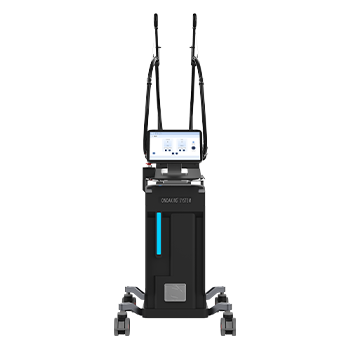
At ZHEONE, we offer a microwave body contouring system within our professional aesthetic equipment lineup. Our verified product specifications outline integrated contact cooling and a smart handpiece system. The platform includes deep, shallow, and facial handpieces to address different treatment depths and areas. Our technical documentation identifies 2.45GHz microwave energy as the active technology for controlled skin and deep-fat heating.
We present these features as tools for treatment planning, not as guarantees of a specific outcome. A clinic must match the handpiece, protocol, and treatment zone to the desired shaping or tightening objective, and must conduct proper patient assessment before each session.
What should buyers discuss with our team?
Prospective buyers can describe their target market, expected patient volume, and preferred treatment areas. They can also share training requirements, regulatory considerations, and service expectations. Our team can then discuss the appropriate configuration, handpiece selection, cooling protocol, documentation, maintenance, and support for the planned clinic program.
FAQ
Q: Does microwave body contouring really reduce fat?
A: Appropriately configured microwave systems can contribute to localized fat reduction in suitable candidates. Body contouring does not replace general weight management. Final outcomes depend on energy mechanism, treatment area, protocol, and individual response.
Q: How many sessions are typically needed?
A: No universal session count applies. The number depends on the device, treatment area, target tissue, baseline condition, patient response, and protocol design. A clinic should establish the review timeline before treatment begins.
Q: Are microwave body contouring results permanent?
A: Certain localized changes can remain visible when body weight and lifestyle remain stable. However, aging, weight fluctuations, and natural tissue changes can alter contours over time. Maintenance requirements vary by device and treatment objective.
Q: Is microwave body contouring safe?
A: When operated by trained professionals following approved protocols and patient screening, microwave systems have an established safety profile. Risks include discomfort, redness, and in rare cases, burns or uneven results when parameters are misapplied. Proper cooling and operator training are essential.